
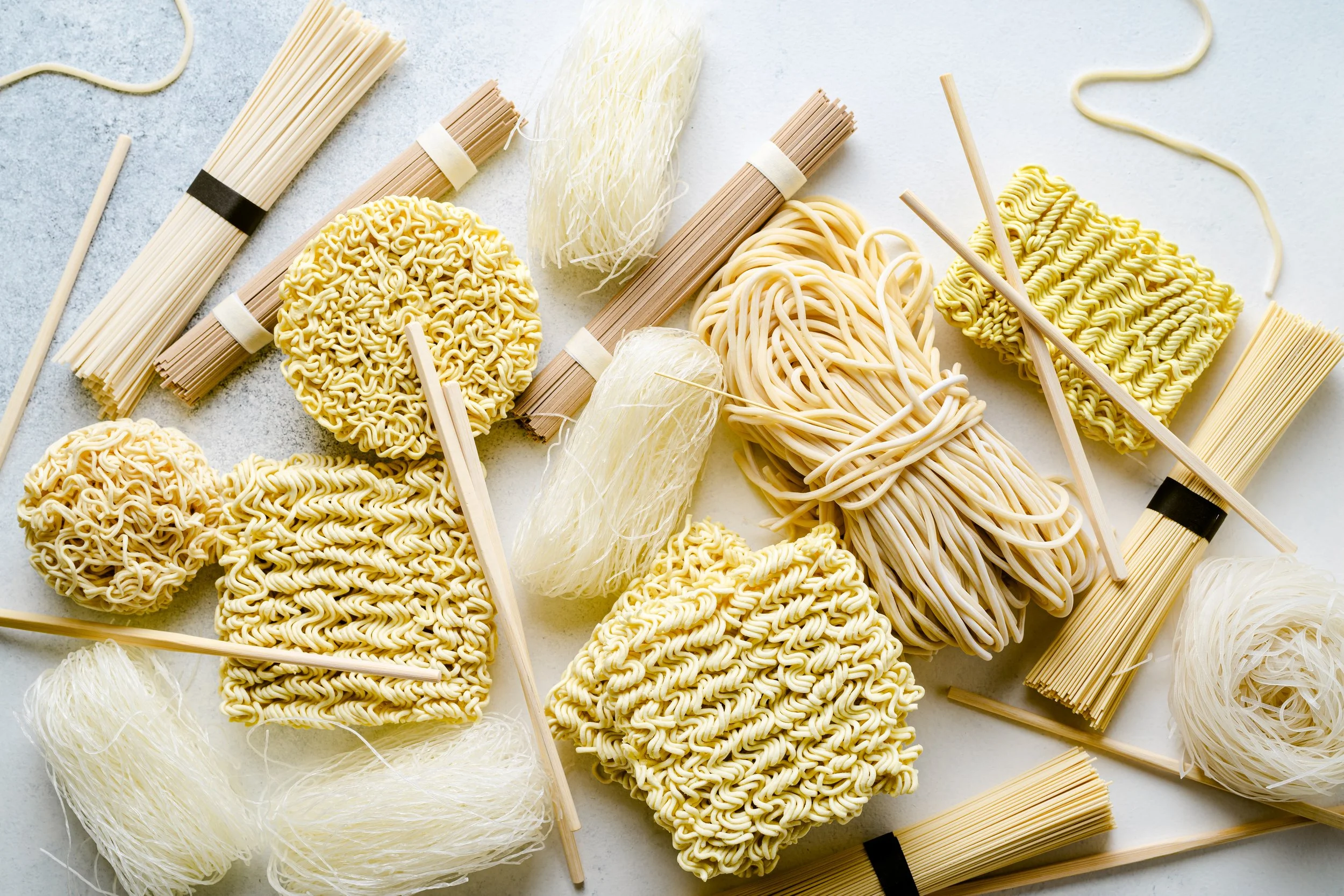
From delicate rice vermicelli to thick, chewy udon, noodles bring different textures to soups, salads and stir-fries. This guide explains the differences between popular varieties, how to cook them and which dishes suit them best.
Start with the dish you want to make, then choose your noodles and check the package directions. Ingredients, thickness and whether noodles are fresh, frozen or dried all affect how they cook, so there is no single method or cooking time that works for every variety.
Rice Vermicelli: Thin Noodles for Rolls, Salads and Soups
Rice vermicelli is very thin and often sold in dry bundles. Many brands are softened in hot water rather than boiled aggressively. Once tender, drain and rinse with cool water if the noodles will go into a salad or roll.
Do not leave rice vermicelli sitting in water after it softens. It can turn mushy and break. Toss drained noodles with a small amount of oil if they must wait briefly before assembly.
Use rice vermicelli in Vietnamese-style noodle bowls, lettuce wraps, soups and fresh or fried rolls. Pair it with the techniques in Valley Marketplace's Crispy Thai Spring Roll Guide.
Flat Rice Noodles: From Narrow Strands to Wide Ribbons
Flat rice noodles range from thin pho noodles to wide stir-fry ribbons. Some are soaked until flexible and then finished in a hot pan or broth. Others are boiled briefly. Fresh versions may need only seconds of heating.
For stir-fry, stop soaking while the noodles are still a little firm. They will continue cooking in the sauce. Add the sauce around the edge of a hot pan and toss gently to avoid tearing softened noodles.
For soup, cook noodles separately when possible, then add them to individual bowls. This prevents them from absorbing too much broth during storage.
Glass Noodles: Translucent and Springy
Glass noodles are made from starch rather than rice or wheat. Common bases include mung bean, sweet potato and potato starch. The noodles become translucent when cooked and have a slippery, springy texture.
Thin bean-thread noodles may only need soaking. Thicker sweet potato noodles are usually boiled. They absorb sauce well, which makes them useful in stir-fries, soups, hot pots and dumpling fillings.
Read the ingredient list rather than assuming every clear noodle is the same. The starch determines texture and cooking time.
Soba: Earthy Buckwheat Noodles
Soba noodles contain buckwheat and often wheat flour. Higher-buckwheat noodles have a more pronounced earthy flavor and can be delicate. Boil them in plenty of water, stir early to prevent sticking and begin checking before the package's maximum time.
Drain and rinse cooked soba thoroughly under cold water to remove excess surface starch and stop the cooking. Serve chilled with dipping sauce, toss with vegetables and dressing or add to hot broth immediately before eating.
People avoiding gluten must read the label because many soba products are a blend of buckwheat and wheat.
Udon: Thick, Soft and Chewy
Udon is a thick wheat noodle sold fresh, frozen, vacuum-packed or dried. Frozen and fresh udon generally have a supple, chewy texture and cook quickly. Shelf-stable packets may be precooked and need only loosening in hot water. Dried udon requires a longer boil.
Use udon in clear broths, curry soup or stir-fries. Rinse it after boiling if it is going into a stir-fry or cold dish. If it is headed straight into hot broth, drain it well and serve immediately.
Ramen and Chinese Wheat Noodles
Ramen noodles are wheat noodles made with alkaline salts that give them a springy texture and yellow tone. Fresh ramen cooks very quickly. Prepare the broth and toppings first so the noodles can be served as soon as they are ready.
Chinese wheat and egg noodles vary widely. Thin noodles work in soup, while thicker steamed or boiled noodles work in lo mein and chow mein. Some fresh noodles need boiling, and others can go directly into the pan. The package method matters more than the general name.
For a fast meal, make a vegetable stir-fry using the sauce and cooking sequence in Pork Stir Fry with Green Onions, then serve it with the wheat or rice noodle recommended on its package.
Somen: Delicate Noodles for Light Dishes
Somen are very thin wheat noodles that cook in only a few minutes. Rinse them well in cold water after boiling and serve chilled with dipping sauce, herbs and crisp vegetables. They also work in a light broth, but add them at the end so they do not become soft.
When to Rinse Noodles
Rinsing is useful when you need to:
Stop cooking for a cold noodle dish.
Remove excess starch from soba.
Cool rice noodles for rolls or salads.
Prepare boiled noodles for a later stir-fry.
Skip rinsing when the noodle goes straight from the pot into a hot sauce that benefits from surface starch, unless the package says otherwise. With soup noodles, cooking separately and draining usually produces a clearer broth and better leftovers.
How to Keep Noodles From Sticking or Breaking
Prepare sauce, vegetables and protein before cooking the noodles.
Use plenty of water for noodles that require boiling.
Stir soon after noodles enter the pot.
Stop cooking while stir-fry noodles are still slightly firm.
Drain promptly and avoid leaving noodles in hot water.
Toss chilled noodles with a small amount of neutral or sesame oil if they need to wait briefly.
Use tongs or chopsticks and a folding motion instead of aggressive stirring.
Serve sauced noodle dishes immediately. Most noodles continue absorbing moisture as they sit.
Build the Dish Around the Noodle
Delicate noodles suit light sauces and broths. Thick udon can handle robust curry or stir-fry sauce. Rice noodles pair well with fresh herbs, lime, fish sauce, chile and crisp vegetables. Soba works with sesame, soy, mushrooms, scallions and chilled dressings.
Use the flavor balance in Thai Coconut Shrimp Curry as inspiration for a curry noodle bowl, or adapt Sweet and Spicy Beef Stir Fry by serving the beef and vegetables over noodles.
Explore Valley Marketplace's international department and choose the noodle that matches the dish, not simply the package that looks familiar.
