
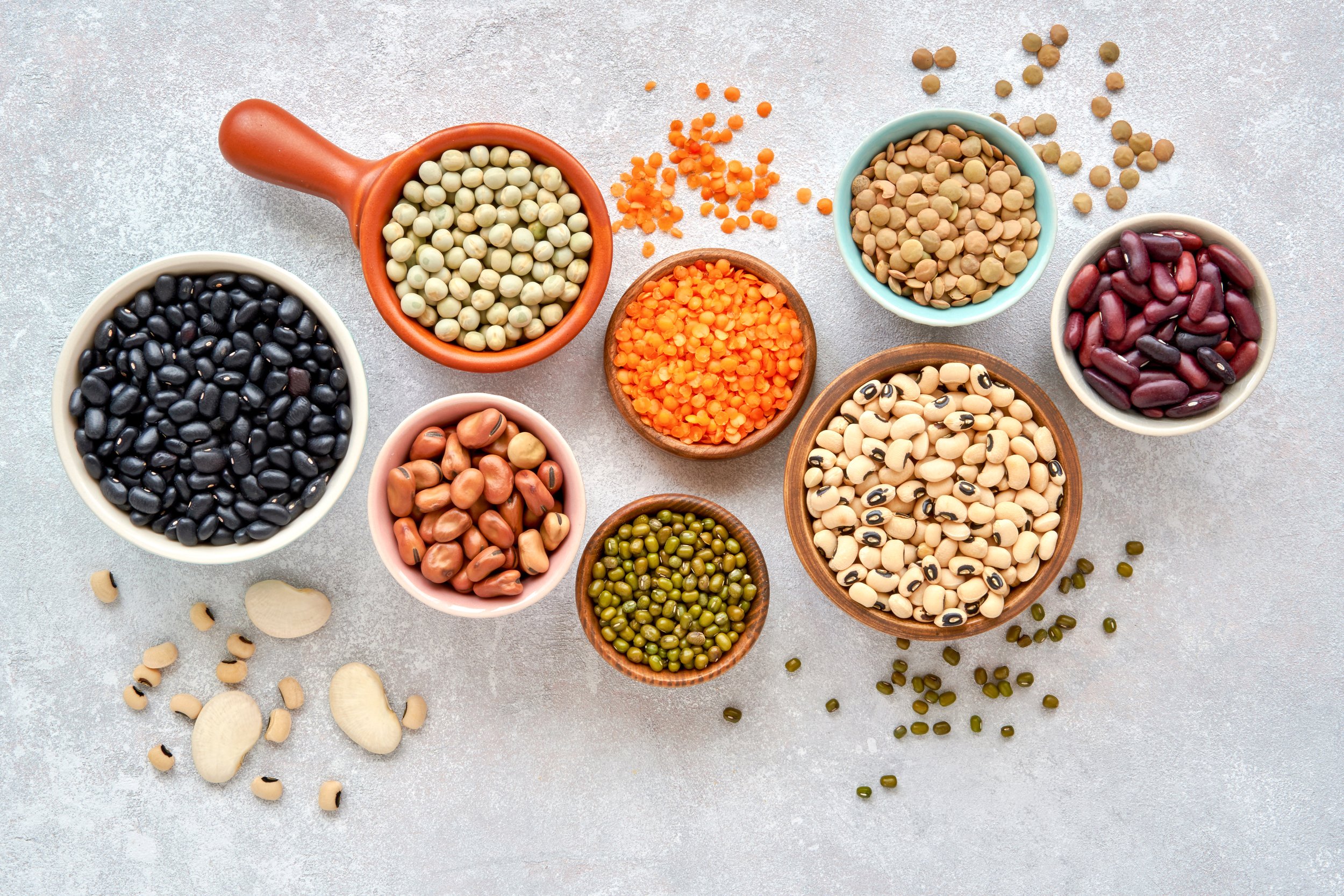
Beans and lentils can become creamy dips, hearty soups, fresh salads or the base of a weeknight meal. This guide helps you choose the right variety for your dish, understand when soaking helps and cook dried beans and lentils to the texture you want.
Most dried beans benefit from soaking, while lentils and split peas usually do not need it. Cooking times vary with the variety, age and size of the beans or lentils, so use package directions as a starting point and check for tenderness as they cook.
How to Sort and Rinse Dried Beans
Spread dried beans or lentils on a clean tray and remove any small stones, debris or damaged pieces. Transfer them to a colander and rinse well under cool running water.
This step matters even when the package looks clean. Dried pulses are agricultural products, and sorting also gives you a chance to remove shriveled beans that may cook unevenly.
Three Ways to Soak Beans
Overnight Soak: Cover sorted beans with several inches of cool water and refrigerate for 6 to 8 hours or overnight. Drain, rinse and add fresh water for cooking.
Quick Soak: Cover beans generously with water, bring to a boil for 2 to 3 minutes, remove from the heat and cover. Let them stand for about one hour, then drain, rinse and cook in fresh water.
Hot Soak: Bring beans and water to a boil for 2 to 3 minutes, cover and let them soak for several hours. University of Nebraska-Lincoln Extension identifies hot soaking as a preferred method because it reduces cooking time and can help dissolve some gas-producing compounds.
Lentils and split peas do not generally require soaking. Black-eyed peas can be cooked without soaking, though a soak may shorten the cooking time.
How to Cook Beans on the Stove
Put soaked, drained beans in a large pot and cover them with fresh water by about two inches.
Add aromatics such as onion, garlic, bay leaf or dried herbs if desired.
Bring the pot to a boil, then reduce it to a gentle simmer.
Partially cover and cook until the beans are tender, adding hot water if needed to keep them submerged.
Test several beans because one can soften before the rest.
Beans should be creamy or tender all the way through, not chalky in the center. Vigorous boiling can split skins and break the beans apart. Add acidic ingredients such as tomatoes, vinegar or citrus after the beans have softened because acid can slow tenderizing.
For kidney beans, follow the package's preparation and boiling directions exactly. Do not use a low-temperature slow cooker as the only cooking method for dry kidney beans unless they have first been boiled as directed. Proper boiling destroys a naturally occurring lectin that can cause illness.
How to Cook Lentils
Cover rinsed lentils with water or broth and bring to a gentle simmer. Brown, green and black lentils hold their shape best when checked early and drained once tender. Split red and yellow lentils are meant to soften, so cook them until they reach the thickness needed for the dish.
One cup of dry lentils generally yields about two and one-half cups cooked. Make a larger batch for soup, salad and grain bowls, then refrigerate or freeze portions promptly.
Choosing the Right Bean or Lentil
For Creamy Dips and Purées: Choose chickpeas, cannellini beans or navy beans. Cook them until very tender. For extra-smooth hummus or white bean dip, reserve some cooking liquid and blend it in gradually.
For Salads and Grain Bowls: Use black lentils, French green-style lentils, chickpeas, black beans or small white beans. Stop cooking as soon as they are tender so they keep their shape. Cool them in a shallow container and add dressing while they are still slightly warm if the recipe allows.
For Soups and Stews: Brown or green lentils, split peas, navy beans, cannellini beans and kidney beans all work well. Split lentils and peas thicken the broth as they cook. Whole beans stay more distinct.
For Tacos, Chili and Rice Dishes: Black, pinto and kidney beans have enough structure for chili, rice bowls, tacos and burritos. Cook them until creamy inside, then season and reduce the liquid to the desired consistency.
Canned and Dried Beans Are Both Useful
Canned beans are already cooked and are ideal when time is limited. Drain and rinse them unless the recipe uses the canning liquid for body. One standard 14- to 15-ounce can provides roughly one and one-half to one and three-quarter cups of drained beans, depending on the variety and brand.
Dried beans cost less per cooked serving in many cases and let you control texture, salt and aromatics. One cup of dried beans generally produces about two to three cups cooked. Exact yield varies.
Storage and Meal Prep
Store dried beans and lentils in hard, sealed containers in a cool, dark and dry place. Older beans may remain usable but take longer to soften and lose quality over time.
Refrigerate cooked beans, lentils and their cooking liquid within two hours. Use refrigerated leftovers within three to four days or freeze them in meal-size portions. A little cooking liquid helps beans stay moist in the freezer.
Keep a Few Varieties on Hand
A practical pantry might include one creamy bean, one sturdy bean and two lentils: chickpeas or cannellini beans, black or pinto beans, brown or green lentils and split red lentils. That small selection covers dips, salads, soups, stews, tacos and quick weeknight meals.
Explore Valley Marketplace's international foods, grains and spices, check the weekly ad while planning your list and browse the recipe collection for serving ideas. Product selection can vary by location.
